Homeowners & extension builders
Floor screeding for extensions and renovations
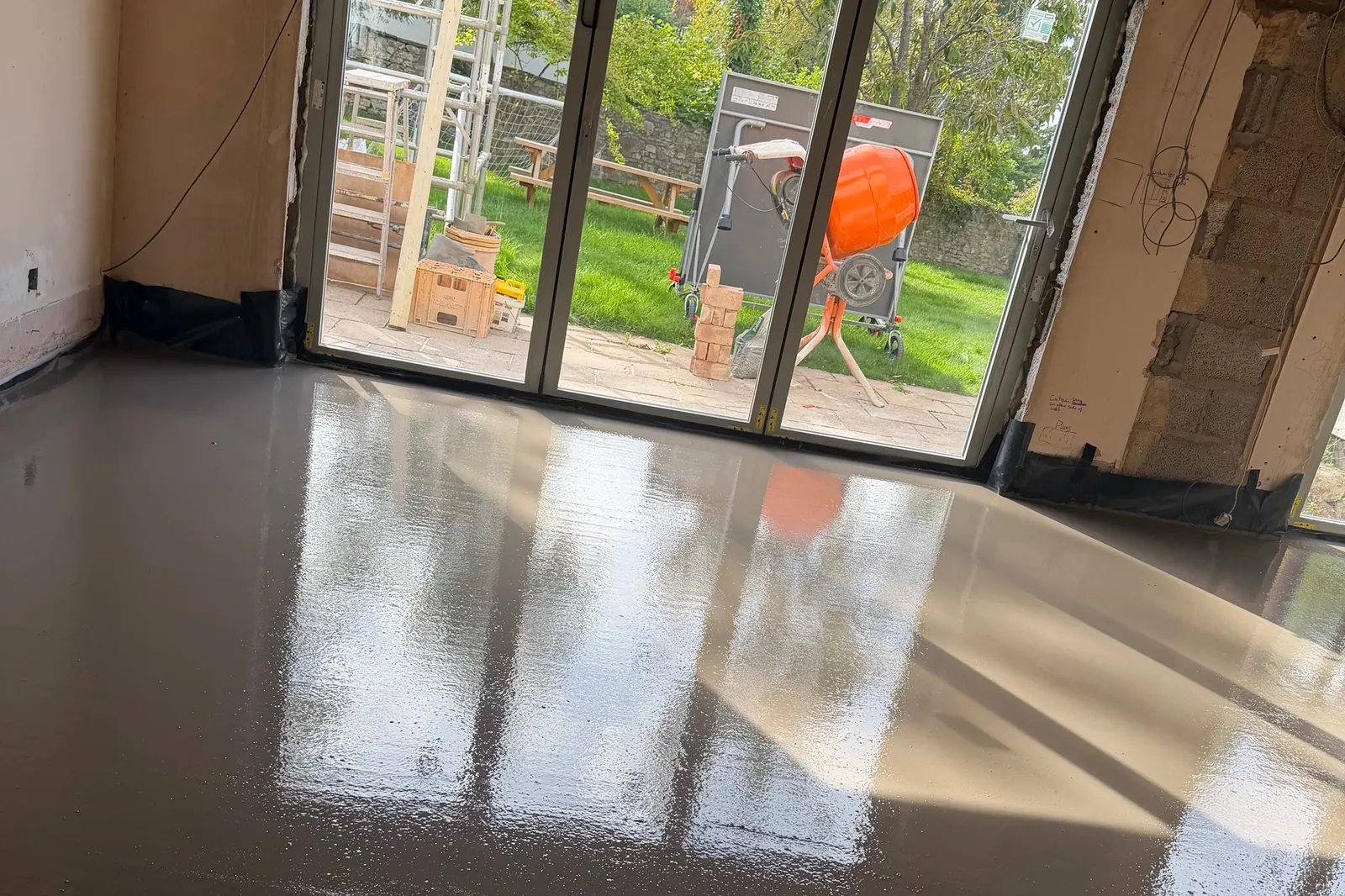
Liquid screed is well suited to extensions. It's pumped in by hose, levelled to meet your existing floor, and most extension floors are done in a single visit.
Why use liquid screed in an extension?
Most extensions join an existing house, and the new floor has to meet the old one at the same level. A self-levelling screed set to an agreed finished floor level makes that straightforward, and gives a flat base for the large-format tiles, LVT and engineered wood that often go into kitchen extensions.
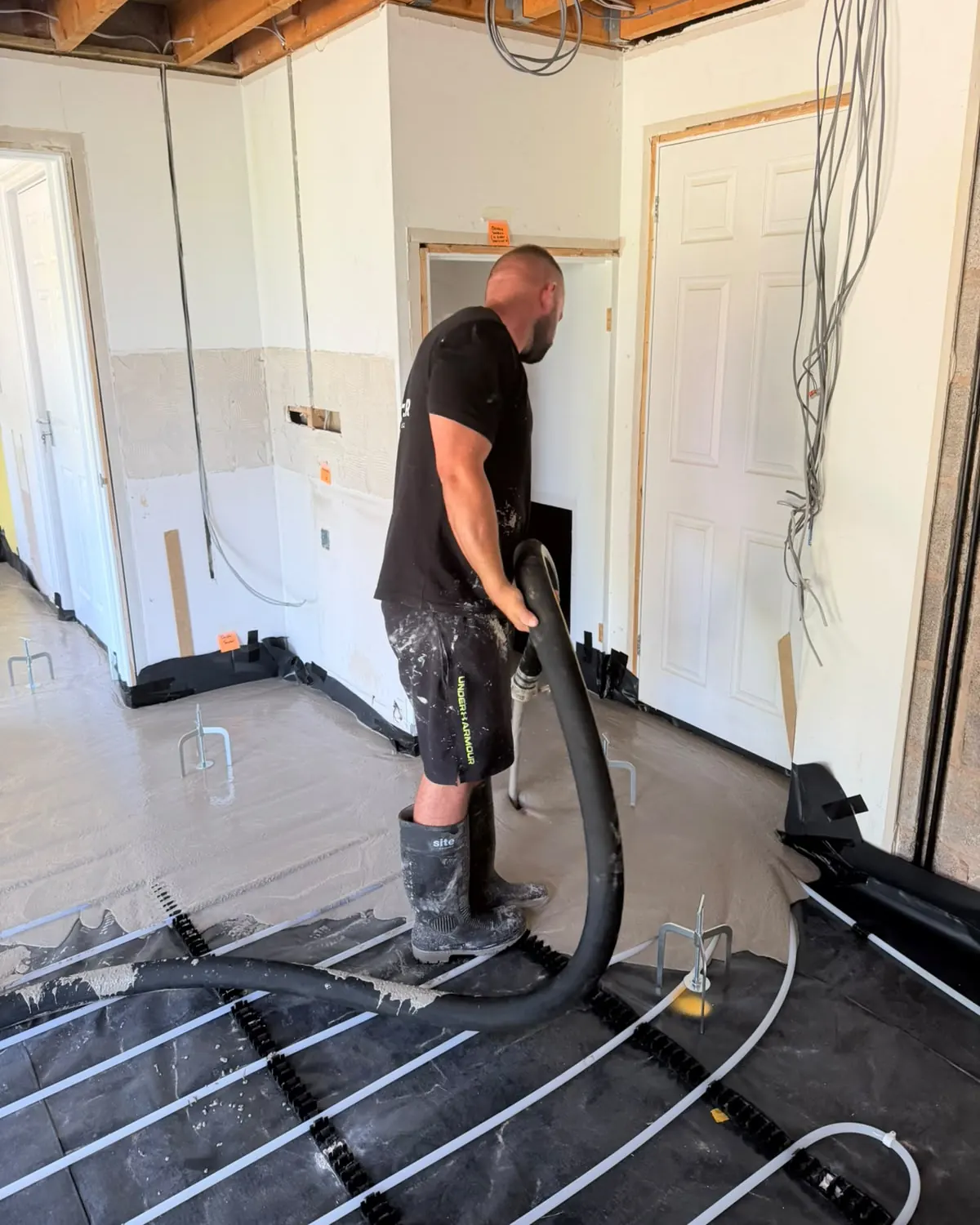
Getting traditional screed into a rear extension usually means barrowing heavy sand and cement through the house or round the side. With liquid screed, the truck parks out front and the screed comes through a hose. Once the floor is poured and the hose is out, the only work left in the room is the screed setting.
Extensions often have underfloor heating. Liquid screed fills around the pipes completely, with at least 25mm cover. More on screed for underfloor heating.
Step by step
How an extension floor gets screeded
Send us the details
Floor area, postcode and, if you know it, the depth and whether there's underfloor heating. A plan or photo helps.
Agree the finished floor level
Usually matched to the existing floor, allowing for the thickness of the new floor covering.
Your builder prepares the floor
Insulation, polythene membrane, edge strip, and underfloor heating fixed, filled and pressure tested.
Pour day
The truck parks as close as practical. We run the hose, set levels, pump and level the floor, then close the room up.
Keep off for 24–48 hours
Cemfloor's guidance for light foot traffic. Keep other trades out and protect the screed from draughts and direct sun.
Drying before flooring
Drying time depends on depth and conditions. The screed should be moisture tested before your floor covering goes down.
Things to know for a smaller floor
Screed is delivered in truckloads by the cubic metre. A small extension may only need part of a load, and suppliers charge extra for part loads, so the price per m² is usually higher on a small floor than a large one. We'll show you this clearly on the quote.
If your project includes more than one area, such as an extension plus a utility or garage conversion, it's often worth screeding them in the same pour.
Renovations
Where a floor is being dug out and relaid as part of a renovation, liquid screed can go down over new insulation in the same way. We'll check the build-up and the depth available at survey.
Got a floor to screed?
Send us the floor area and postcode and we'll come back with a clear written quote.